Cormorants and Shags (Phalacrocoracidae)

Family (Latin)
Phalacrocoracidae

Cormorants and shags are medium-to-large birds, with body weight in the range of 0.35–5 kilograms (0.77–11.02 lb) and wing span of 45–100 centimetres (18–39 in). The majority of species have dark feathers. The bill is long, thin and hooked. Their feet have webbing between all four toes. All species are fish-eaters, catching the prey by diving from the surface. They are excellent divers, and under water they propel themselves with their feet with help from their wings; some cormorant species have been found to dive as deep as 45 metres. They have relatively short wings due to their need for economical movement underwater, and consequently have the highest flight costs of any bird
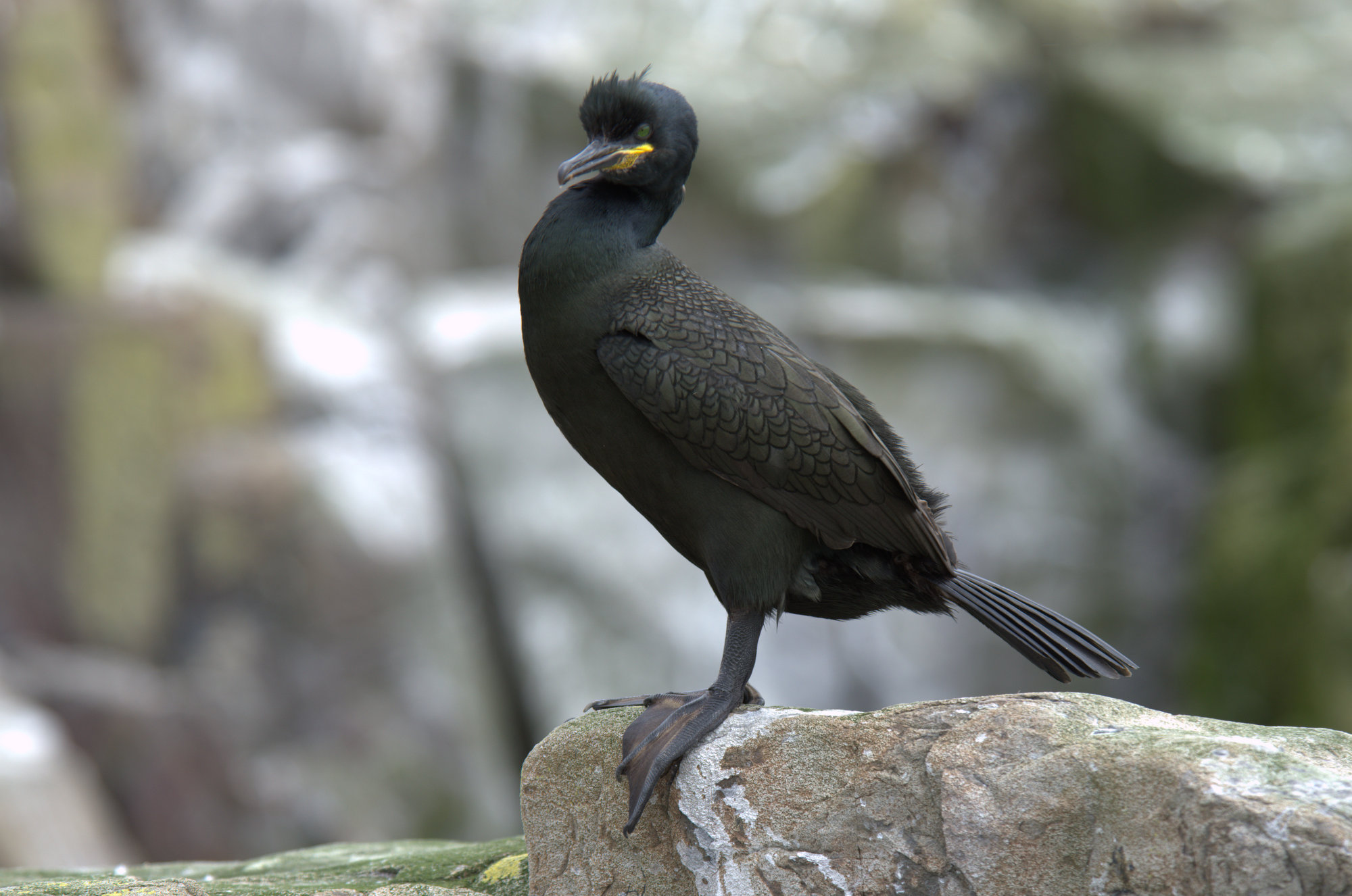
Phalacrocorax aristotelis

This is a medium-large black bird, 68 to 78 cm (27 to 31 in) long and with a 95-to-110-centimetre (37 to 43 in) wingspan. It has a longish tail and yellow throat-patch. Adults have a small crest in the breeding season. It is distinguished from the great cormorant by its smaller size, lighter build, thinner bill, and, in breeding adults, by the crest and metallic green-tinged sheen on the feathers. Among those differences are that a shag has a lighter, narrower beak; and the juvenile shag has darker underparts.

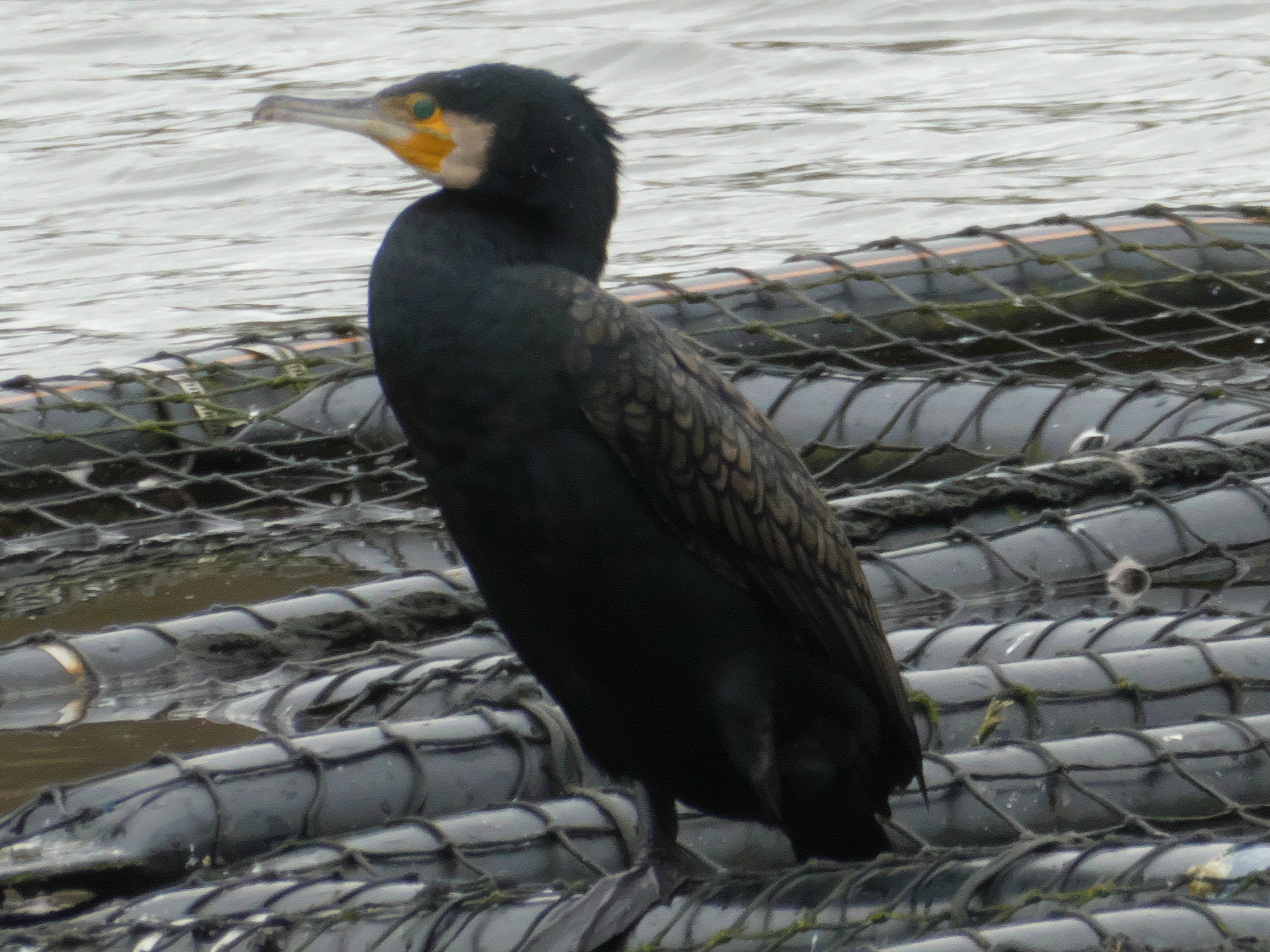
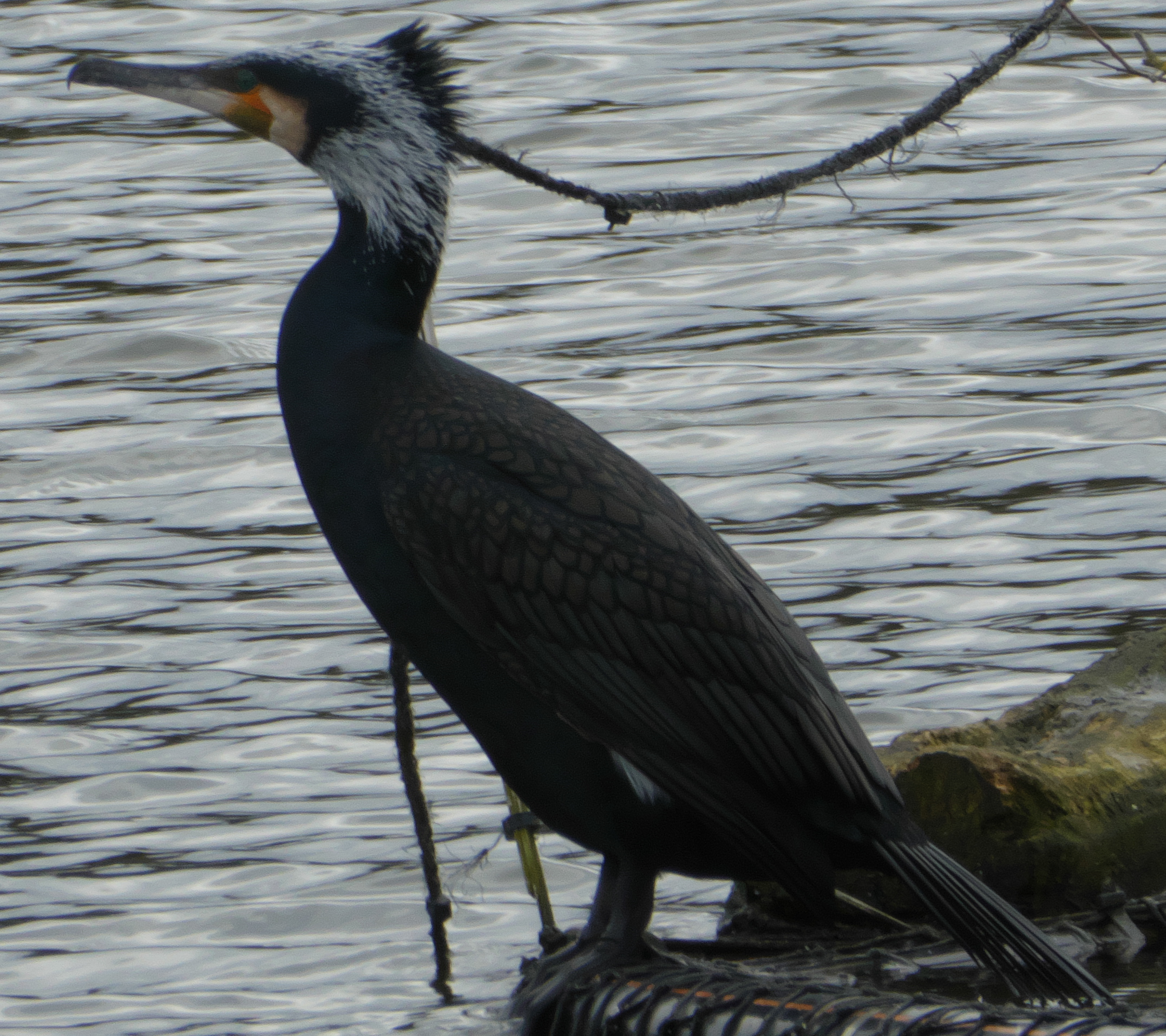
Phalacrocorax carbo

A large and conspicuous waterbird, the cormorant has an almost primitive appearance with its long neck making it appear almost reptilian. It is often seen standing with its wings held out to dry. It has a white patch on its throat